We'd already booked a few nights break in Northumberland, when we got an offer that we couldn't refuse from the Grant Arms on Speyside, so we decided to add a stay there onto our break, and make more of a holiday of it. This was not specifically birding holiday, but I did manage to get a little birding in.
This post (Pt.1) covers the Northumberland part of the holiday.
Monday 24th January
Because of the short hours of daylight, we decided to take the quick route (A42, M1, M18, A1) for most of our journey. However, we left the A1 at Scotch Corner, and headed into Barnard Castle, then Middleton in Teesdale. We had a picnic lunch at the Bowlees Nature Reserve (all facilities closed), and then headed up through Alston to Knarsdale. We then took some extremely minor roads to Haydon Bridge, and stopped a couple of times to look at distant Red Grouse, and to let some Red-Legged Partridge get off the road.
This post (Pt.1) covers the Northumberland part of the holiday.
Monday 24th January
Because of the short hours of daylight, we decided to take the quick route (A42, M1, M18, A1) for most of our journey. However, we left the A1 at Scotch Corner, and headed into Barnard Castle, then Middleton in Teesdale. We had a picnic lunch at the Bowlees Nature Reserve (all facilities closed), and then headed up through Alston to Knarsdale. We then took some extremely minor roads to Haydon Bridge, and stopped a couple of times to look at distant Red Grouse, and to let some Red-Legged Partridge get off the road.
 Red Grouse (female)
 Red Grouse (male)
  Red-legged Partridge From Haydon Bridge we went up to Hadrian's Wall and followed it into Newcastle. Our base for three nights was at the Silverlink Travelodge in rooms at £9 per night!
Tuesday 25th January
Awaking to a poor weather forecast, but a more promising one for the following day, we decided on some bracing walks along the coast. Our intention was to have a stop at Seaton Sluice, but we took the minor road option which hit the coast road a mile or two south of there, and decided to check out the 'straight on at the roundabout' option (Old Hartley). From the coast car park there's a great walk southwards. Soon after setting out, we stopped to view the lighthouse on St. Mary's Island (see below).
 View from near car park to St. Mary's Island & lighthouse
 Rock patterns
 Barnacles
We climbed back up to the cliff top and continued along the path to St. Mary's Island, over the causeway. We had distant views of birds out at sea but, without a scope, some of these were not identifiable. Everything was shut up, and needing to answer a different call of nature, having grabbed a shot or two of one of the lighthouse buildings' resident House Sparrows, we soon headed back to the car park on the landward end of the causeway.
 House Sparrow (male)
 Black-headed Gull
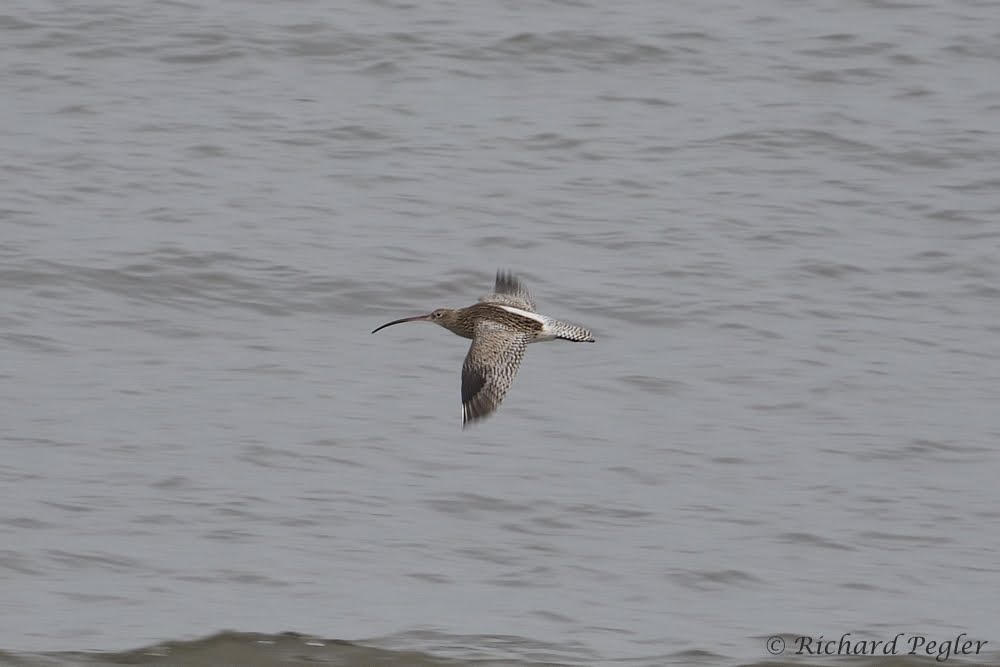 Curlew
The light was already fading by the time that we arrived. In the summer, this had been a great place for birds, but we saw almost none on this day - just a few corvids, and one small flock of Chaffinch with a Brambling with them.
In the summer, many of the roads and tracks on the range had been closed, due to military exercises taking place. This time, absolutely everywhere seemed to be open, and so we set off to explore some of the wilder areas which just had rough tracks through them. The range is vast, and it's quite easy to get lost. It was quite creepy in the near-dark, coming across the hulks of military vehicles. I guess we spent around three hours covering about thirty miles on the range, leaving when it was quite dark.


 Military hulks on Otterburn Ranges
That night we had an excellent Chinese meal in the Mulan restaurant in Morpeth.
Wednesday 26th January
Having been disappointed at the lack of wildlife seen on the ranges the previous evening, we settled on a visit to the Holy Island of Lindisfarne instead. The tides for crossing were in our favour, and neither of us had been there before. It also has a good reputation as a place to see waders.
We arrived just before the recommended first crossing time, but the tide was well below the causeway already, so we crossed. From the causeway, we saw quite a few waders in the distance. Having parked up on the island we set off to explore. First seen was an Oystercatcher in a field behind the public loos - bill encrusted with mud!
 Oystercatcher
 The castle - Holy Island
To the south of the road to the castle, there were waders a-plenty. In the image below are Bar-tailed Godwit, a Redshank, and a Curlew (wrestling with a crab).
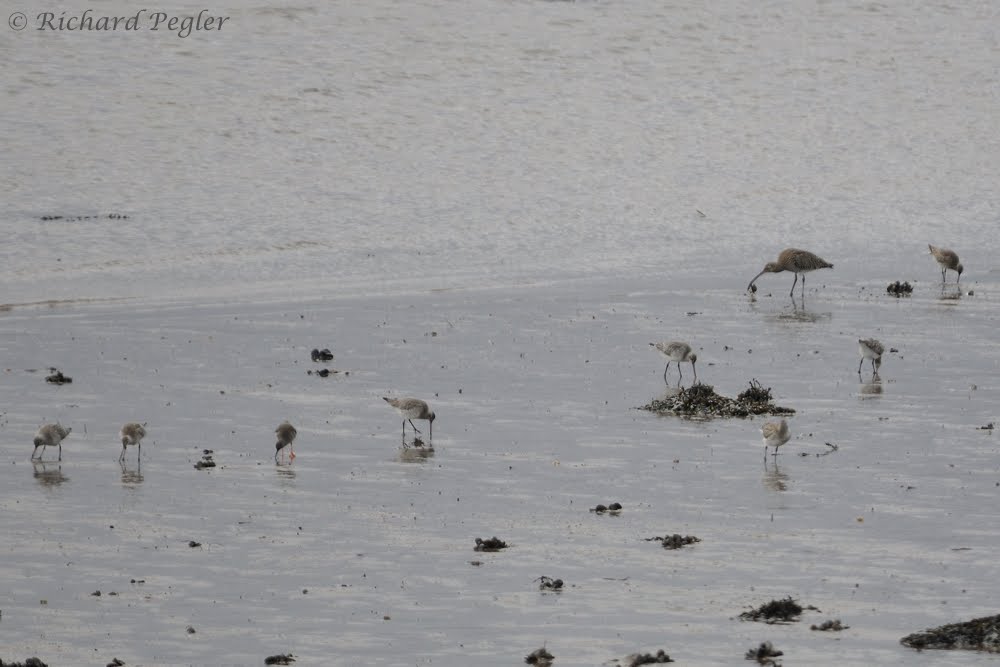 various waders
This lone Grey Plover was also nearby - I'm not very good with waders (particularly in their winter plumage), so if you think I've mis-identified any of these, please let me know.

 Grey Plover
Curlews were in abundance.


 Curlew
On the other ('inland') side of the road were many birds in the distance (should have taken the scope!). However, these Teal were somewhat nearer.
 Teal
TealThis Bar-tailed Godwit was quite confiding - seemed to be very pale in colour.


 Bar-tailed Godwit
This Lapwing was also quite confiding.
 Lapwing
Having had a late lunch in a pub on the island, we headed back across the causeway to the mainland.
Not far south of Holy Island is Bamburgh - famous for its magnificent castle. South of the castle is an area of huge and ancient sand dunes. I stopped to take a photo of the castle from the dunes, not noticing, until I got home, that there was a Stonechat in the picture!
 Bamburgh Castle - Stonechat on fence!
Over the dunes and onto the beach, where we found a couple of Herring Gull, but also this solitary Sanderling in the rapidly fading light - the frustrating part of holidays in the north at this time of year is the very short hours of daylight.
 Sanderling
The next day we would travel to Speyside. I've yet to process the photos from this second half of the holiday, but will post an account as soon as I have done so.


 Rook
Rook 


