With Lindsay's continuing improvement, I managed to get out more during this period than I have done since early December. However, I have still not ventured to anywhere further than 20 minutes away from home, although I sense that that is likely to change soon!
Wednesday, 15th February Saltersford Valley ; Garden
I had a late morning visit to Saltersford Valley Country Park this morning. I was pleased to find that the boardwalk had been repaired and was now safe and open once more - which bodes well for the dragonfly season when it starts! However, nothing of interest was seen from the boardwalk on this occasion.
Round by the second 'stockade' on the first lake a Coot was photographed on the water.
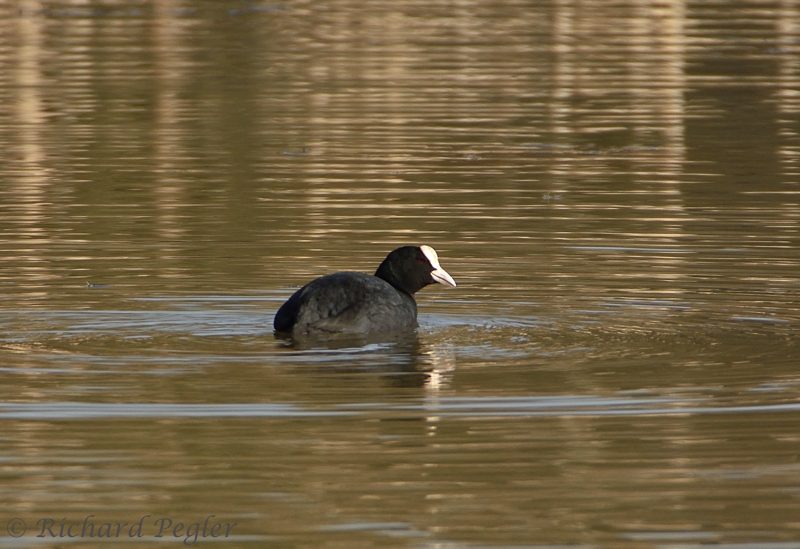 |
Coot (Fulica atra) - Saltersford Valley CP
|
A little further on, I had a view of a Black-headed Gull posing nicely on a post in the rusty water area of the first lake.
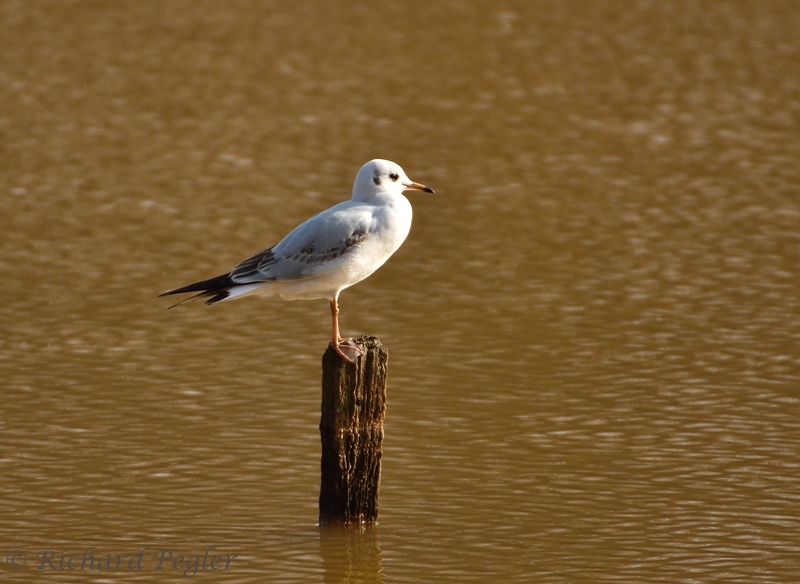 |
Black-headed Gull (Chroicocephalus ridibundus) - Saltersford Valley CP
|
I then spent a pleasant time at the 'stockade' on the second (main) lake, although not much was seen. Here are a few items.
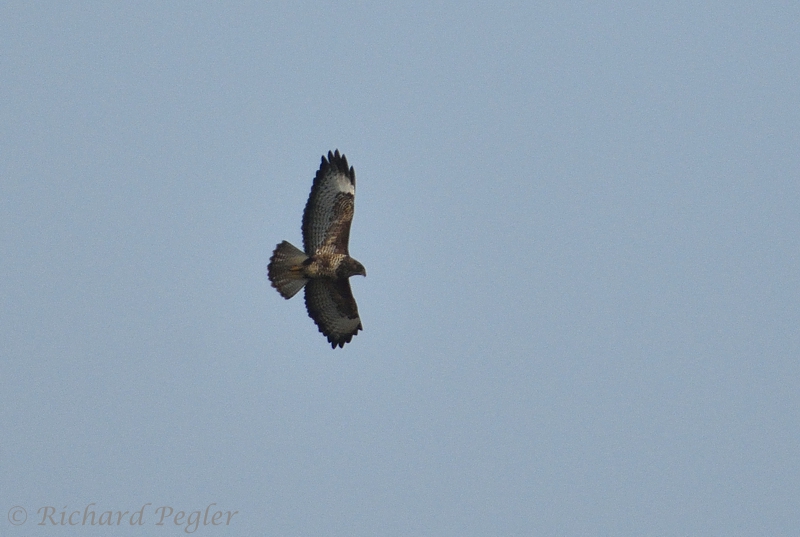 |
| Common Buzzard (Buteo buteo) - from Saltersford Valley CP |
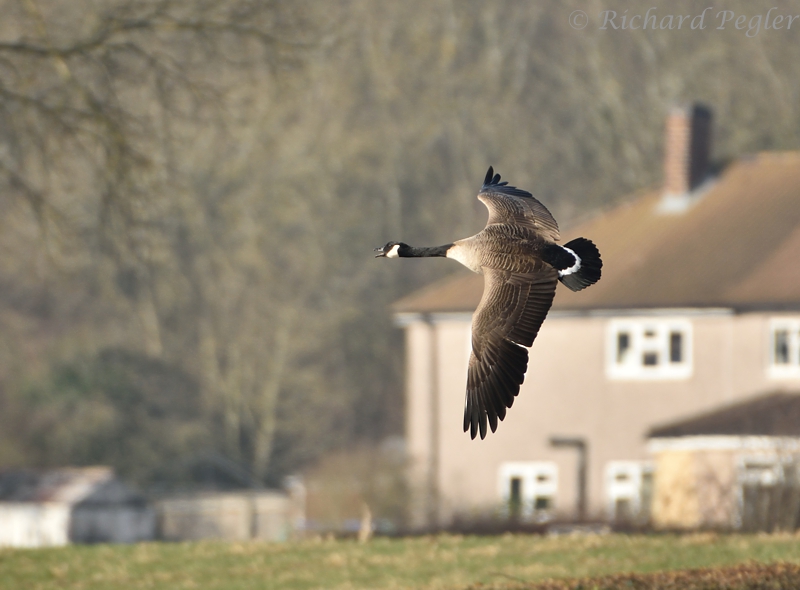 |
| Canada Goose (Branta canadensis) - Saltersford Valley CP |
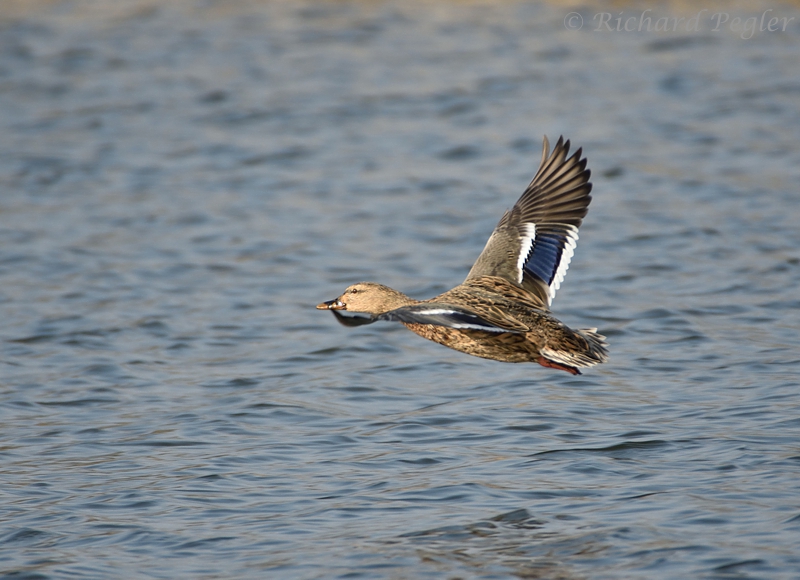 |
Mallard (Anas platyrhynchos) (female) - Saltersford Valley CP
|
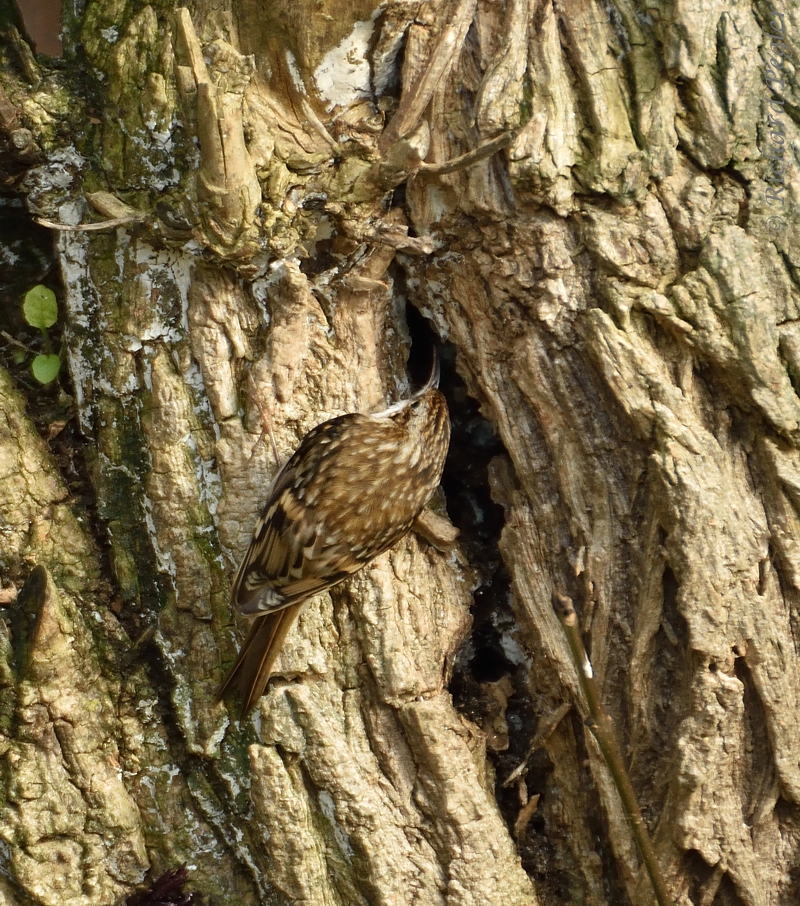
Early that afternoon, we had a garden visit from a Treecreeper. Some years we see a Treecreeper in the garden and some years we don't, so I was delighted that I'd gone out in the morning, rather than the afternoon which is currently more normal for me. The last of the three images shows that it was duly rewrded for its visit.
 |
Treecreeper (Certhia familiaris) - garden on 15th February, 2023
|
At one point, I thought I might have glimpsed a second Treecreeper, but I suspect that it was a Wren impersonating one. It was certainly a 'Wrenny sort of day' - as witness, this next shot!
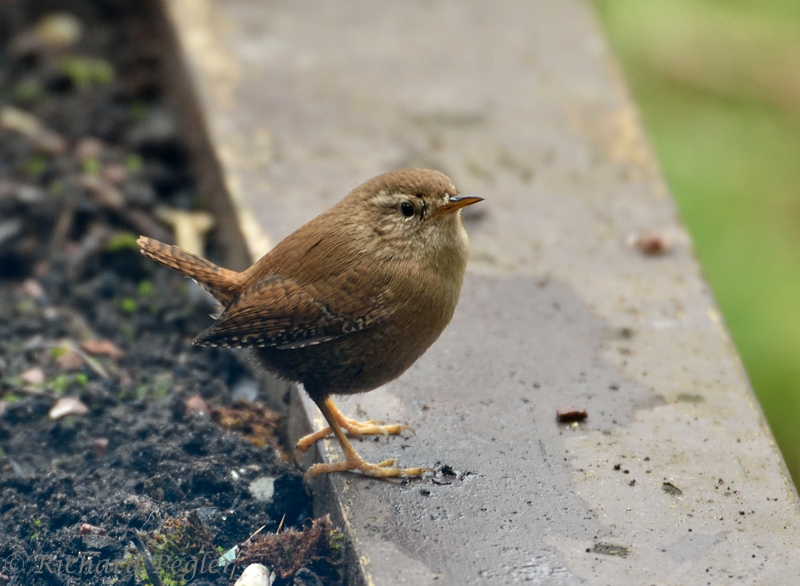 |
Wren (Troglodytes troglodytes) - garden on 15th February, 2023
|
Saturday, 18th February Kelham Bridge
On this day, I had a return visit to Kelham Bridge Nature Reserve. This time I arrived to find I had company in the first hide. It was a gentleman who I instantly recognised, but couldn't put a name or location to. To my embarrassment, he clearly knew who I was and even where I lived! I regret that I didn't have the courage to ask his name. We did, nevertheless, have a most enjoyable conversation, and I was given some valuable advice about cameras that I might consider, as I said that I was probably moving away from Nikon.
After he departed, I started taking a few shots, concentrating mainly on the distant pair of Green Sandpipers. Sadly, they stayed at the far side of the water.
 |
Green Sandpiper (Tringa ochropus) - Kelham Bridge NR
|
As little else was happening, after a while I went on to the second hide, where I had the place to myself.
A pair of Mute Swan were on the bank near the hide.
 |
Mute Swan (Cygnus olor) - Kelham Bridge NR
|
A pair of Gadwall eventually came near enough to photograph.
 |
Gadwall (Mareca strepera) (male + female) - Kelham Bridge NR
|
Two drake Teal briefly appeared in the far corner and then retreated out of sight almost immediately before I could even get a record shot.
I then called in back at the first hide, and the only thing to come before my camera was a female pheasant.
 |
Common Pheasant (Phasianus colchicus) (female) - Kelham Bridge NR
|
Shadows were deepening and it was time to leave.
Sunday, 19th February Hicks Lodge ; Thortit Lake ; Saltersford Valley
I decided to take a chance this day, and make a morning return visit to Hicks Lodge, in the full knowledge that it would be relatively busy with dog walkers, cyclists and children. I was glad I went, however, as I met my old pal Mick Smith and his wife there, busy with a WeBS (Wetland Bird Survey) Count.
A flock of Lapwing were flying around. Mick reckoned there were about 60 of them, and I tried counting and came to the same conclusion. This is just part of the flock which was not in a particularly tight formation.
 |
| Lapwing (Vanellus vanellus) - Hicks Lodge |
Canada Geese usually give an audible warning before taking to the air, so I manged a shot of this one.
 |
Canada Goose (Branta canadensis) - Hicks Lodge
|
Taking the trail along the western edge of the lake, a Coot was on the grass ahead of me. It seemed quite relaxed about my gentle approach until a child ran at it from the opposite direction.
 |
Coot (Fulica atra) - Hicks Lodge
|
MIck told me that he had counted 20 Goosander present - several times - that morning. He was trying to come up with a higher number as the 'round 20' looked suspicious! I found that I had a distant but clearer view of some of these while standing at the north-west corner of the lake.
 |
Goosander (Mergus merganser) (males + females) - Hicks Lodge
|
Driven by the thought that I might get better views of Goosander at Thortit Lake, which was only a short walk from where I'd parked my car, I set off for there.
I did find a pair of Goosander there that were somewhat closer than those at Hicks Lodge, and also a Great Crested Grebe.
 |
| Goosander (Mergus merganser) (female + male) -Thortit Lake |
 |
Great Crested Grebe (Podiceps cristatus) - Thortit Lake
|
I'd contacted Mick with a message to let him know of these birds at Thortit Lake, and Mick replied some time later to inform me that there was a Great White Egret hanging around Oakthorpe Flashes. Uncertain as to which part of this fairly extensive complex it might be on, I enquired back, and was given a good pointer. Our daughter was visiting that afternoon and as there was an extended period when she was in deep conversation with Lindsay, I took my leave and went to see if I could find the bird.
Five minutes later, I saw the bird as I drove past it in my car, turned round in Saltersford Valley CP car park, drove back up the road, parked, took some shots, and was back home again less than quarter of an hour after leaving.
The shots were straight into the late afternoon sun, but at least I saw the bird. I include the second shot because, every time I see a Great White Egret head-on with its neck fully extended, I can't help but wonder how the heck it manages to control such an appendage with any accuracy. It looks so ungainly!
 |
Great White Egret (Ardea alba) - Saltersford Valley
|
Monday, 20th February Kelham Bridge
My main reasons for making return visits to Kelham Bridge Nature Reserve lately are twofold. Firstly, I find it very relaxing to sit in a hide and watch the world outside, even if there are not many birds or other wildlife, around. Secondly, as I have mentioned in a previous post, I am probably going to switch from being a Nikon camera user to being a mirrorless Canon user. In the past, the hides at Kelham Bridge have been busy with Canon users, most of whom seem to have gone 'mirrorless'. They're a friendly bunch of people and I have been wanting to hear their advice. However, these days, it seems that very few people are visitng Kelham Bridge.
This day I was lucky and, at the first hide, I was soon joined by the gentleman who, a a couple of weeks earlier, had given me the inspiration to go down the Canon route. He was using the exact same set-up that I was contemplating. I gleaned quite a bit more useful information and was even able to compare shots of the same subject taken with his set up and my current set up. The only aspect that I am not yet comfortable about is the image processing workflow - converting raw images to .jpg and experting them to a different folder with subject name appended to the filename. This I am currently investigating.
While I was in the first hide, an obliging Great Tit made a few appearances.
 |
Great Tit (Parus major) - Kelham Bridge NR
|
The Pheasants were also keen to get in on the action.
 |
Common Pheasant (Phasianus colchicus) (male) - Kelham Bridge NR
|
The two Green Sandpipers were still there, and this time came quite a bit closer than on my previous visit.
 |
| Green Sandpiper (Tringa ochropus) - Kelham Bridge NR |
While trying to photograph the Green Sandpipers, I noticed a Snipe had popped out of the reeds. It didn't stay long before popping back in again.
 |
Snipe (Gallinago gallinago) - Kelham Bridge NR
|
At the second hide I was, once again, on my own for the duration. There were three pairs of Gadwall there, only one pair of which came within photographic distance.
 |
| Gadwall (Mareca strepera) (female + male) - Kelham Bridge NR |
There were a few brief showings of Teal in the far distance but, eventually, two males just about made it into the reach of my lens.
 |
Teal (Anas crecca) (male) - Kelham Bridge NR
|
Tuesday, 21st February Garden
Although the Sparrowhawk has frightened away many of our garden birds, as I write this we are still, I am pleased to say, getting visits from Lesser Redpoll. We had three visit us on this day.
 |
| Lesser Redpoll (Acanthis cabaret) - garden on 21st February, 2023 |
I shall call a halt to this post now as it turned out to be rather longer than I originally anticipated at the start of the week.
I intend to offer another blog post in a week's time. In the meantime, please take good care of yourselves and Nature. Thank you for dropping by - - - Richard